Dicevaders makes a reroll compete with the next shop refresh.
ARGUMENT · Official listing and selected English player reports · Not played · Sources checked Oct 9, 2026. Our method.
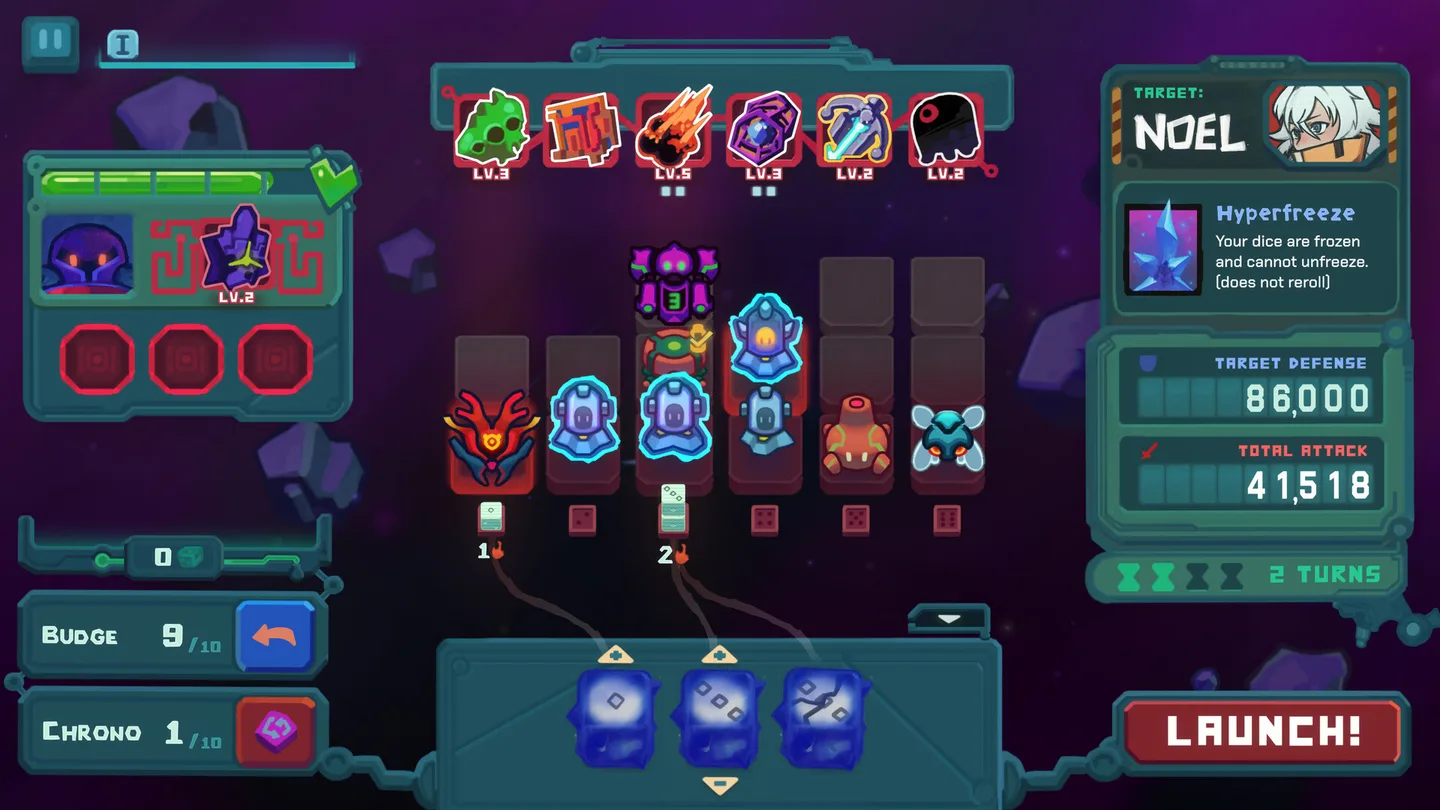
Dicevaders gives Chrono two jobs. The official description says it pays for rerolling dice and restocking the shop. Spending it to repair the result in front of you can therefore compete with finding a different unit for the engine.
Budge supplies another means of manipulating a throw. These are distinct interventions rather than a general promise of control over luck: one resource serves both dice and shopping, while another modifies the dice result. The listing connects them to an alien force arranged on a scoring grid.
The combos have a shape. The page says you align dice in pairs, triples or a quadruple. A near miss is one face short of the set you were building. Each turn you can acquire units, artifacts, Budges and Chrono, and placement on the grid is what the page says raises the score. The developer calls the dice your most powerful tool and says tactical decisions, not luck, determine the outcome. That sentence is the store’s claim.
Commanders keep the shop side specific. Each one brings a strategic approach, synergies, perks, artifacts and XP scaling. Pilots from StarVaders arrive to protect the planet, and the page says each has abilities meant to disrupt the invasion. A reroll might be finishing a triple. It might be answering a pilot. The listing does not price either spend. It also does not name the commanders. An old promotional commander image is left out of this account.
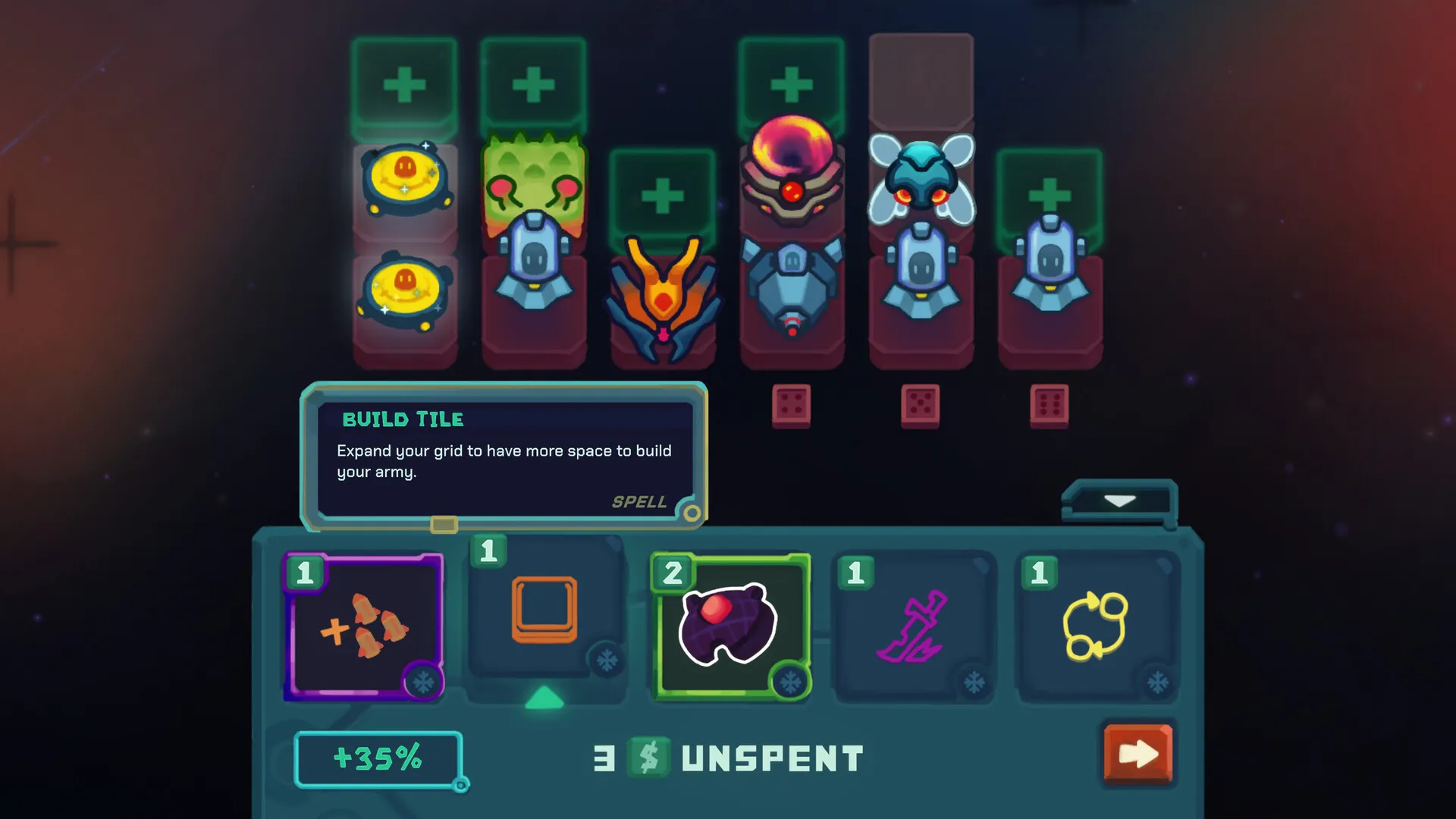
That shared cost suggests a consequential near miss. A reroll could help the current combination; a restock could change what the force is built to do. This is an interpretation of the documented uses, not a claim that either choice wins in a particular situation. Exact costs and complete scoring rules would be needed to calculate the tradeoff.
A September 30 positive reviewer praises being encouraged to pivot and build broadly instead of stacking one interaction indefinitely. Steam records 5.0 hours at review time. Their account gives the shop side of the question a purpose: new offers can matter because the player sees a reason to change direction.
An October 2 negative reviewer, with 0.7 hours recorded at review time, sees potential strategic depth but finds information hard to use. They describe hovering over units and relics to inspect effects and progress, and difficulty reading the multiplier. That is a precise complaint about evaluating the engine, not a finding that combinations are random or absent.
The reports concern different stages and do not establish how well the interface teaches itself over a full run. Together they sharpen the supported design question. If Chrono can buy a better roll or another offer, deciding between them depends on knowing what the present combination contributes. A large score is an outcome; it need not explain the value of the alternative you declined.
That is where the next look should concentrate: one scoring chain, the available reroll and shop options, and the information shown before spending. The premise has a specific second cost worth noticing. Whether the interface makes that cost easy to judge remains open, and an old promotional commander image cannot settle the current content limits.
Sources & context
Official listing rechecked October 9 for Chrono, Budge, pair and triple combos, commanders and the pilots. Two selected English review permalinks were rechecked October 8. The reports were posted September 30 and October 2; they contrast strategic pivoting with information access at different playtimes. No representative sampling or current balance test. Earlier paraphrases about two other reviews were removed because the originals did not support them. The commander-image age/content claim is omitted. The claim that decisions, rather than luck, decide the outcome is the developer's sentence.
- Official Steam listing Checked Oct 9, 2026
- Dated player report on Steam Checked Oct 8, 2026
- Dated player report on Steam Checked Oct 8, 2026
One mechanic, the decision it creates, and a little dry humor.