The Great Wastes moves its cooldown clock with character actions.
PREVIEW · Official Steam listing · Not played · Sources checked Oct 9, 2026. Our method.
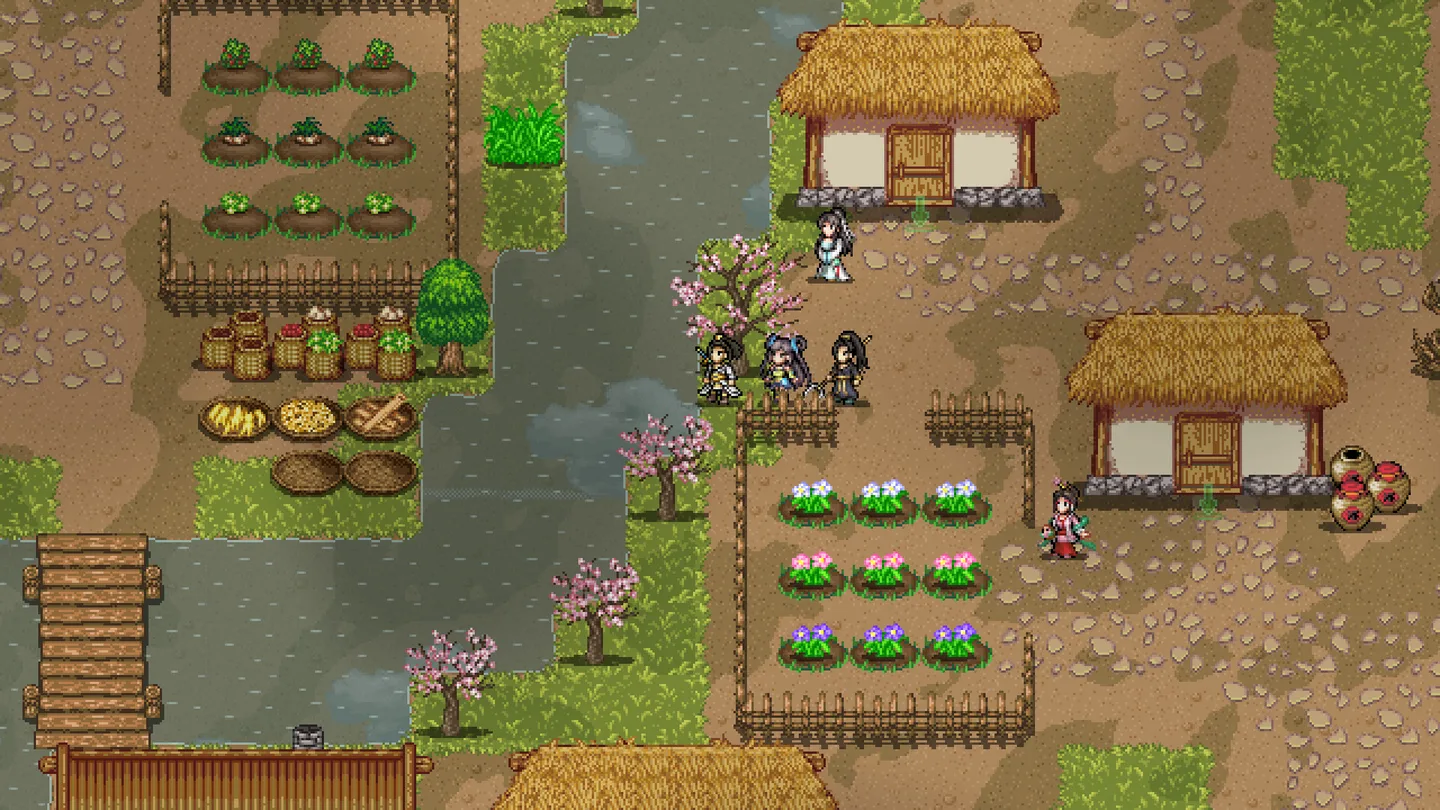
The Great Wastes puts a smaller clock inside the turn. Its official description keeps alternating player and enemy rounds, but resolves status durations and skill cooldowns through character actions. Choosing an action can affect timing as well as its immediate target.
The page also describes extensive re-action, so a character can act again inside that structure. What has already moved the clock is the thing to look at before the next action. The same paragraph says these changes produce faster combat, more control and richer strategy. Those are the developer’s evaluations. The inspectable rule is the smaller clock. No particular cooldown combination is printed, so there is no sequence to prescribe.
How you look is specified. Select a target and the page says you can read that character’s status and skills without leaving for another screen. A basic attack is select, then click a valid target. A skill starts with a hotkey, the cursor previews the range, and a click on a tile fires it. The mouse can stay in the target area and preview several skills. The developer also says the game is fully set up for a controller and as fluid there as it is with a mouse. That is a claim about input. The action clock is a claim about timing.
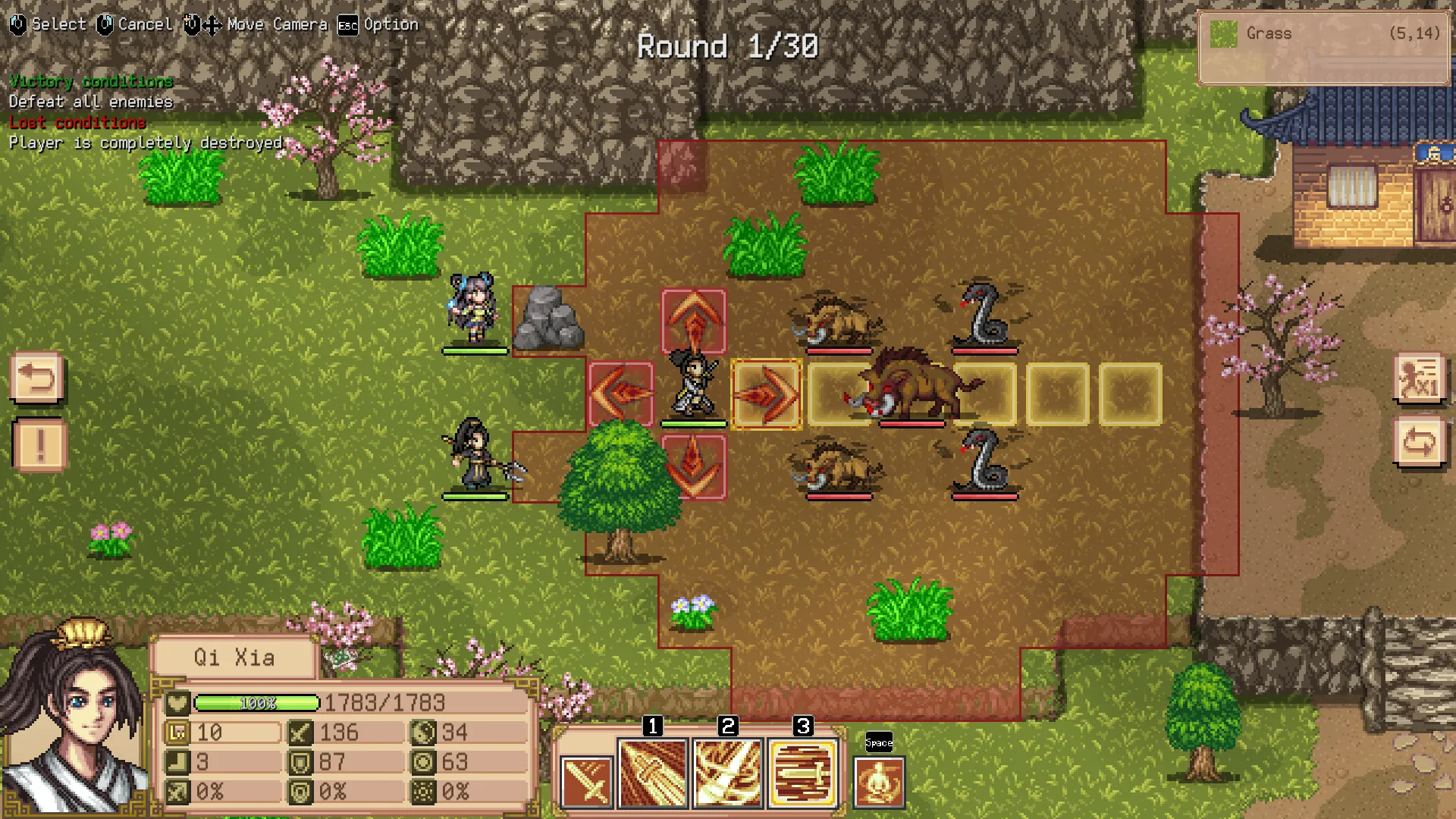
Preparation is the other half of the same decision. Before battle you adjust party members, equipment and skills. Companions join with their own weapons, skills and talent systems, and the page says going alone cannot overcome the enemies. Every enemy has its own talents and skills. Maps that hold wild monsters also hold a field boss. If the fight goes badly, battlefield rewind returns you to preparation. It also lets you review the status information from each character’s action turns, which the listing offers as a way to analyze enemy skills. The rewind is the closest the page comes to showing you the smaller clock after the fact.
Equipment is a separate workshop that still has to pass through that clock. Field bosses drop materials for gear. The page says a piece can be enhanced without going obsolete as your level rises, refined for new traits, and infused with spirits. Four infused pieces can resonate. The gear changes what an action does. On this page, it does not change the rule that the action moves the cooldown.
The story around the fights is a linear campaign in chapters, with new areas for free exploration unlocking as it advances. That scope is the developer’s description. The earlier English comment sample is not used here. The comparison the listing supports is one displayed duration before a character acts and after. Companions, the hotkey preview and the rewind are what you would watch while you make it.
Sources & context
Official listing rechecked October 9. Action timing, hotkey previews, companion roles, battlefield rewind and the forging rules are the listing's. The earlier four-comment English sample is not used. No timing combination, controller behavior or campaign scope was tested. Controller support and the claim of faster, deeper combat are the developer's sentences.
- Official Steam listing Checked Oct 9, 2026
One mechanic, the decision it creates, and a little dry humor.