MONITOR / REPLACE
D.E.C.A.Y.
D.E.C.A.Y. makes one failed shield node drain its neighbours faster
PREVIEW · Official Steam listing · Not played · Sources checked Oct 9, 2026. Our method.
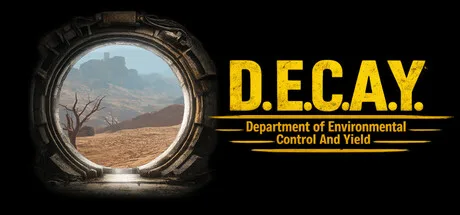
D.E.C.A.Y. gives one failed battery a consequence beyond its own installation. The official description says an Atlas shield node shutting down immediately redistributes its load, causing neighbouring nodes to drain several times faster. The replacement job belongs to a network that changes while part of it is offline.
Your bunker terminal monitors that grid. To maintain it, the operator ventures onto the surface, finds nuclear batteries and performs the game’s advertised hot replacements. That connects a local expedition with the state of installations elsewhere: getting a battery into one node is part of protecting the remaining capacity around it.
The description supplies no exact multiplier, node topology or safe repair window. It cannot support a universal replacement order or a prediction of how long a particular neighbour will last. What it does establish is why checking only the failed unit would be an incomplete reading of the situation. A shutdown changes the stated drain conditions of other units immediately.
The Atlas installations maintain a fictional radiation and thermal shield over the region, giving the network a purpose within this VR survival premise. If that maintenance problem attracts you, inspect how the terminal communicates redistributed load and remaining battery life. The consequential rule is the connection between nodes: postponing one replacement can make the next part of the network more demanding.
Sources & context
The official description establishes shutdown-linked redistribution and accelerated drain, without a topology, exact multiplier or repair window. VR interaction and hardware operation were not tested.
- Official Steam description Checked Oct 9, 2026
One mechanic, the decision it creates, and a little dry humor.